

August serves as a critical operational bridge for streamlining small business accounting. Nestled between the mid-year operational lull and the looming surge of end-of-year trading, this brief window offers forward-thinking business owners an opportunity to inspect and tune their underlying management infrastructure.
When Q4 arrives, customer demand accelerates rapidly. However, many business owners find their growth throttled not by a lack of sales, but by administrative friction—payroll bottlenecks, delayed client billing, manual expense approvals, and messy bookkeeping. To capitalise fully on peak season revenues, growing companies must actively reduce business admin friction before the surge hits. Modernising core financial workflows through cloud accounting for SMME environments ensures your operational engine remains responsive under maximum pressure.

The Invisible Cost of Administrative Drag Before Peak Season
In many South African businesses, administrative processes evolve organically rather than by design. What works for a team processing ten transactions a day collapses when volume multiplies during the final quarter.
When high-volume periods intersect with manual administrative touchpoints, severe operational bottlenecks emerge:
- Delayed Billing & Stalled Cash Flow: Manual invoice creation and approval chains delay billing cycles. During Q4, when inventory expenditure and operational demands peak, cash tied up in unbilled work or slow receivables can compromise overall working capital and cash flow management.
- Payroll & Compliance Bottlenecks: Processing monthly payroll, statutory deductions, and SARS compliance via disconnected spreadsheets consumes vital leadership hours right when executive focus should be directed toward client fulfilment and sales execution.
- Data Lag & Reactive Decision-Making: Relying on historical month-end summaries means management makes inventory, staffing, and pricing decisions based on outdated financial snapshots rather than current realities.
By deploying integrated digital tools and adopting modern paperless accounting solutions, SMMEs systematically strip out manual handoffs, allowing administrative throughput to scale effortlessly without requiring additional headcount.
Legacy Financial Admin vs. Q4-Ready Digital Architecture for Small Business Accounting
To understand how operational modernisation protects your Q4 margins, examine how traditional management contrasts with integrated digital workflows during peak trading periods:
| Operational Dimension | Traditional / Manual Management | Q4-Optimised Cloud Architecture |
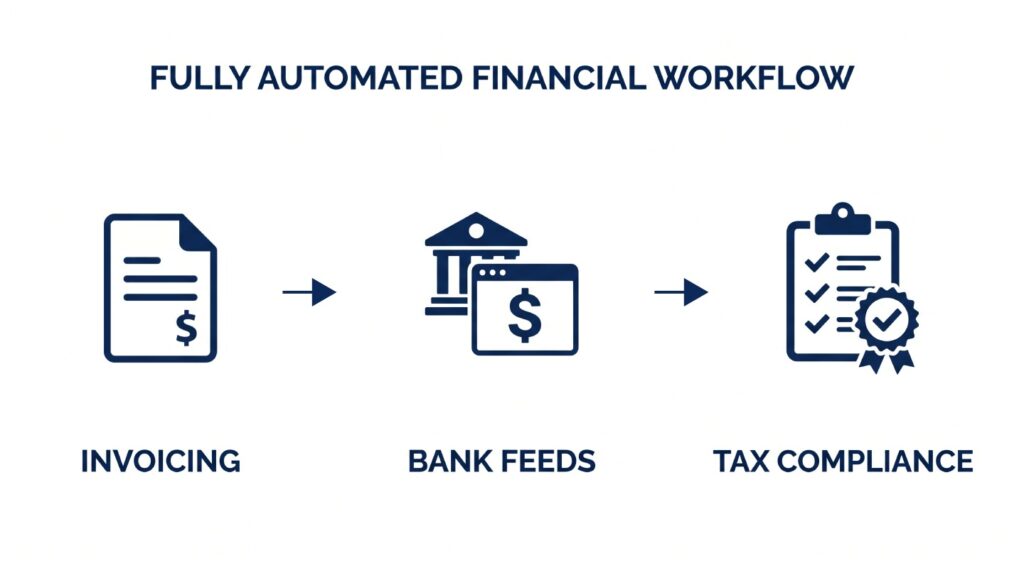
| Transaction Ingestion | Manual data entry from paper slips, PDFs, and bank statements; highly prone to processing backlogs. | Automated bank feeds and digital receipt processing with direct ledger mapping. |
| Invoicing & Collection | Delayed invoice issuing; static payment terms requiring manual ledger tracking and manual payment matching. | Automated instant billing, real-time tracking, embedded online payment links, and automated debtor reminders. |
| Payroll Processing | Isolated spreadsheet calculations; manual SARS EMP201/EMP501 filing preparation. | Integrated payroll engines with automatic statutory calculation and streamlined tax submission preparation. |
| Operational Visibility | Static monthly income statements produced 15–20 days after month-end. | Live diagnostic dashboards offering real-time visibility into cash flow, debtor days, and gross margins. |
| System Resiliency | Vulnerable to physical document loss, local hardware failures, or power disruptions. | Encrypted cloud access is accessible anywhere, providing uninterrupted operational continuity. |

Strategic Value: Turning Financial Administration into a Competitive Advantage
Preparing your back office for peak commercial activity yields direct financial and strategic returns.
1. Compressing Debtor Days to Protect Working Capital
In the buildup to Q4, cash flow predictability is paramount. Digital invoicing platforms allow sales teams or service providers to issue compliant invoices directly from the field or immediately upon project completion. Integrated payment options enable clients to settle accounts instantly, drastically shortening collection cycles and providing the liquid capital required to fund seasonal expansion.
2. Live Diagnostics for Dynamic Margin Control
Supply chain costs, freight charges, and material prices fluctuate rapidly during peak season. Real-time financial diagnostic reporting allows management to monitor profit margins per product line or service offering continuously. If operational costs spike, business owners can adjust pricing or trim overhead immediately rather than discovering margin erosion weeks after the quarter ends.
3. Reduced Administrative Headaches and Enhanced Risk Management
Admin friction diverts valuable energy away from customer acquisition and operational excellence. Automating ledger entry, bank reconciliations, and expense logging lowers administrative stress and establishes a bulletproof audit trail. Furthermore, linking clear financial diagnostics with updated risk management ensures your business assets and liabilities are accurately covered by appropriate business insurance policies.
4 Steps to Prepare Business for Q4 Rush Success
Implementation should take place well before peak trading begins in November. To ensure a smooth transition:
- Audit Workflow Friction: Identify exact points in your sales-to-cash process where paperwork, manual approvals, or physical receipts cause delays.
- Centralise Management Infrastructure: Transition isolated ledgers to a unified cloud framework designed specifically to offer accessible cloud accounting for SMME operators.
- Automate Invoicing and Collection: Establish automated billing rules and recurring invoice schedules to ensure continuous cash inflow.
- Establish Real-Time Health Monitoring: Configure diagnostic dashboards to track cash flow reserves, gross profit margins, and key operational metrics daily.
South African small business owners require lean, integrated tools to operate with maximum agility. Partnering with a dedicated service provider ensures your back-office setup serves as an accelerator for growth rather than an operational bottleneck.
Position your operational engine for total reliability this coming season. Contact us today to discover how our single, affordable financial management solution helps South African small businesses eliminate admin friction, or read more operational growth strategies on the ODEA Blog.